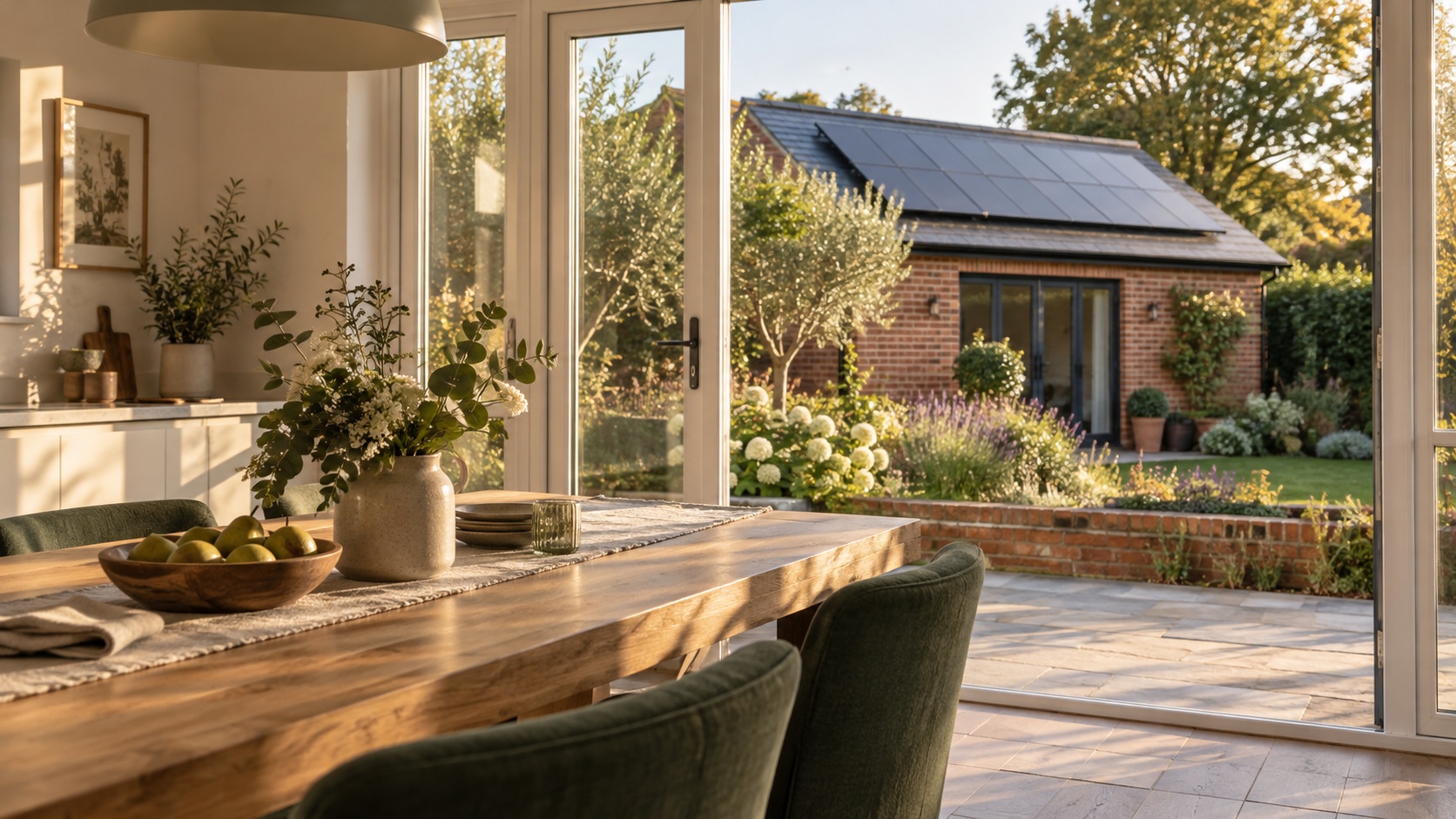
Daylight on the panels becomes direct current, which the inverter turns into the alternating current your home runs on.
1 of 4 · Generate
Panels turn daylight into electricity
Photovoltaic panels on the roof produce direct current when daylight reaches them. An inverter, normally mounted on a wall inside the house, converts it to the alternating current your sockets and appliances use.
Worth knowing: Panels produce more in bright conditions and less on dull days or when shaded. Output follows the day and the seasons, not your habits.
2 of 4 · Use now
Your home takes it first
The electricity flows into your household wiring. Whatever is running at that moment, such as a fridge, a kettle or a washing machine, uses it before anything else happens. Any shortfall is made up from the grid as usual.
Worth knowing: The match between when the sun shines and when you use power is the central question for any household. It is why a quiet daytime house and a busy evening one need different conversations.
3 of 4 · Store
A battery can hold the surplus
If the home has a battery, surplus electricity charges it so you can use it later, often in the evening. A battery is a separate, optional decision; solar panels work without one.
Worth knowing: Batteries have a nominal and a usable capacity, and they are sized separately from the panels. See the battery guide before treating one as a default.
4 of 4 · Export
What is left can flow to the grid
Surplus that is neither used nor stored can pass through the meter to the grid. Whether and how it is paid for depends on separate arrangements that vary between suppliers and over time.
Worth knowing: Ask for export terms in writing rather than assuming a payment, and check whether the property has the meter arrangements it needs.
What solar does not do
A solar system does not produce a steady amount every day, does not remove your connection to the grid, and does not make every home suitable. Output changes with weather, season, roof direction and shade. A guide cannot tell you what your own roof would produce; that needs someone to look at it.
Start with one email
Questions about your own home?
Add what you want to know to your enquiry sheet, then send it by email in one go.