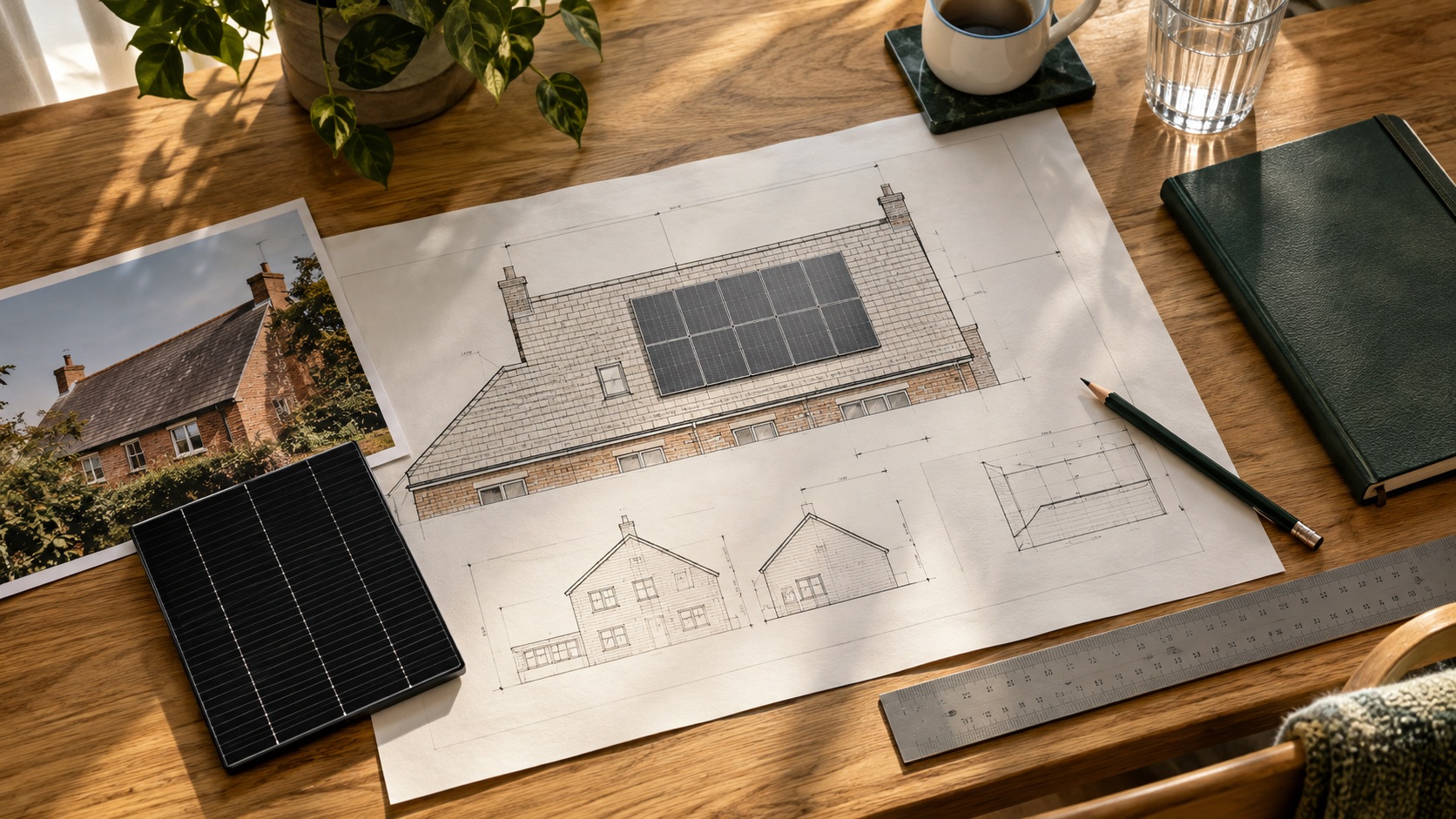
Anatomy of a proposal
Where the differences hide
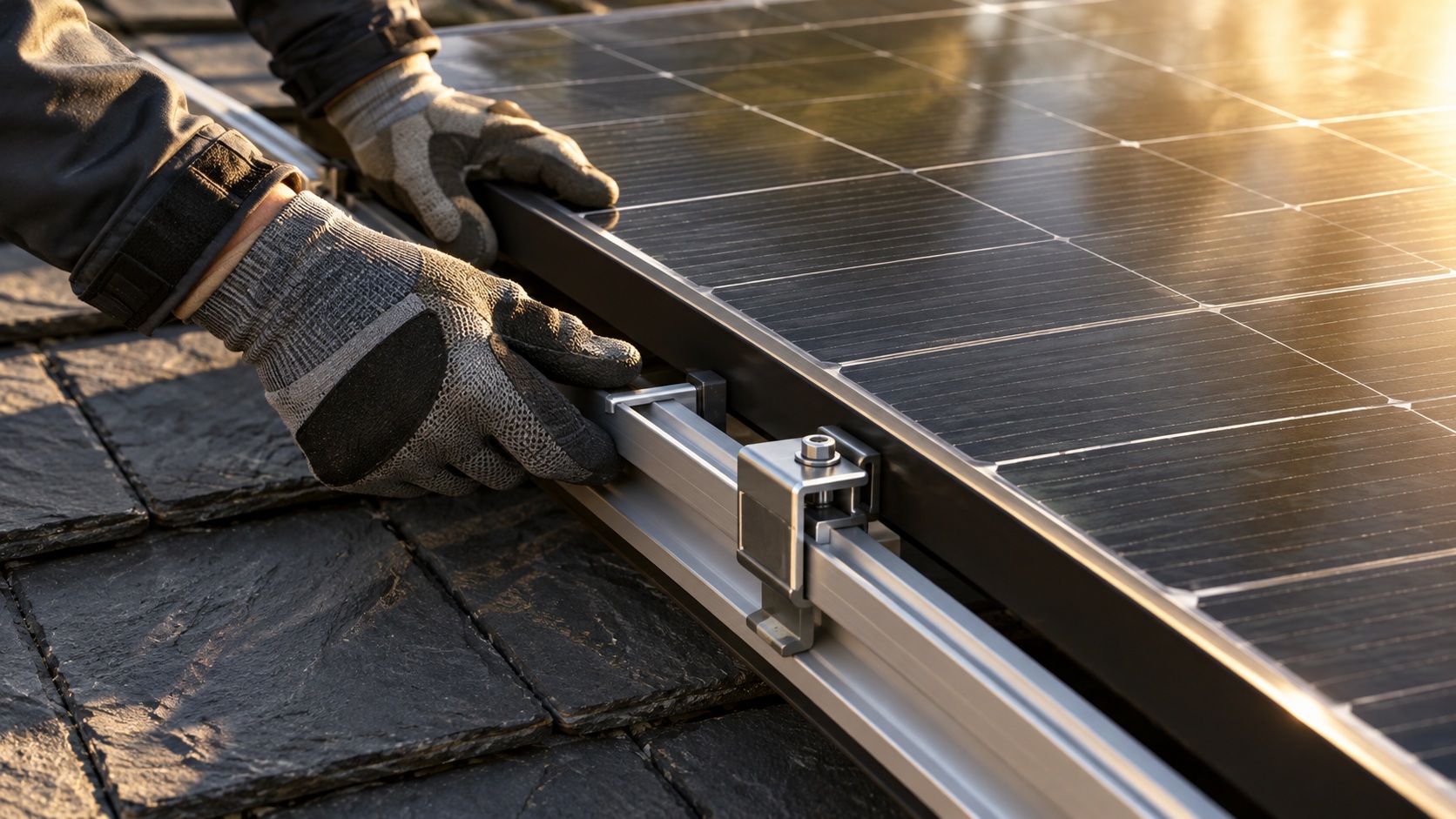
- ScopeWhat is included from first fixing to commissioning, and what is somebody else’s job.
- EquipmentNamed panels, inverter and mounting, so each can be looked up.
- AssumptionsThe roof direction, shade and electricity use behind any claim.
- ExclusionsEverything left out. Silence on a point is a question to ask.
Illustrative installation concept. This is a guide to reading a proposal, not an actual project specification or price.
Why the headline prices differ
Read the explanation +
A quote is a price for a particular package of equipment and work. One proposal may include scaffolding, a new consumer unit and a monitoring app; another may assume the scaffolding is yours to arrange. One may size the system for your actual evening use; another may simply fill the roof. The cheaper figure can be the smaller, emptier or less supported offer.
The fix is to compare the same eight things in every proposal. Where a proposal is silent, treat the silence as a question rather than an answer.
Line three proposals up
Type what each proposal says, row by row. If it does not say, tick “not stated”. The rows you flag become written questions you can send on.
Nothing you type here leaves your device.
Evidence,
in writing.
Credentials are only useful if you can see the document and know what it proves. Ask for each in writing, then check it with the issuer directly rather than relying on a logo on a brochure.
01Scheme certificate
What it can showThe installing business has been assessed by a certification scheme against its standards, and the scheme can confirm it.
What it does not showThat your quote is fair, or that this installer is right for your roof.
02Public liability insurance certificate
What it can showCover for damage or injury to other people or property while work is carried out.
What it does not showThat a workmanship guarantee will be honoured later.
03Workmanship warranty document
What it can showWho promises to put faults right, for how long, and what is excluded.
What it does not showThat cover survives if the business closes, unless it is insured or backed.
04Equipment data sheets and manufacturer warranty
What it can showThe specification of what is being fitted and who you claim from if a panel or inverter fails.
What it does not showThat the installer will help with a claim.
05Company registration details
What it can showThe legal company you would sign a contract with, which you can check on the public Companies House register.
What it does not showAnything about the quality of its work.
Before you
commit.
The price tells you what you pay. The terms tell you what you are protected against. Add the ones that apply to your sheet and ask for the answers in the contract, not a conversation.
TERMS / QUESTIONS TO PUT IN WRITING
- How much is the deposit, and what does it secure?
- Is payment staged against work completed, and who signs off each stage?
- What are my cancellation rights, and are they written into the contract?
- What happens to my money if the company stops trading before the work is finished?
- Who do I call about a fault in year one, and in year ten?
- Is the workmanship warranty insured or backed by a third party?
- Does the quote say who owns the monitoring account and the data?
Make your next conversation specific
Bright Ray Solar Limited is a domestic solar company. If you want to know what it can provide for your home, send your gaps as a plain enquiry and ask for the scope, the equipment and the terms in writing.
Start with one email
Bring your questions to Bright Ray
Your sheet becomes an editable email draft addressed to Bright Ray Solar. You review it, and you press send.